University of Hawaii Develops AI Tool to Forecast Spread of Invasive Coconut Rhinoceros Beetles
University of Hawaii researchers are creating a machine learning tool to predict the spread of invasive coconut rhinoceros beetles, assisting targeted pest control on Kauai, Maui, and Hawaii Island.
AI News Insights
Part 1 of 5
Table of Contents
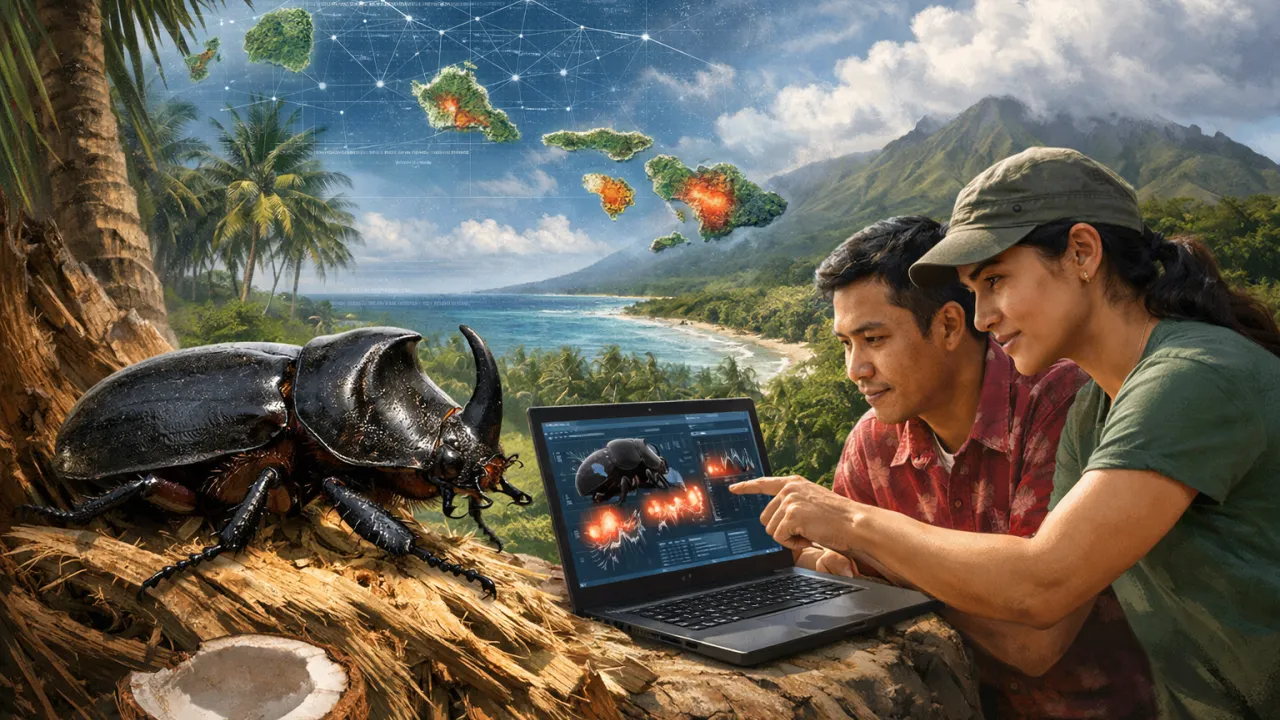
Researchers at the University of Hawaii Manoa’s College of Tropical Agriculture and Human Resources are developing an artificial intelligence tool to predict the spread of invasive coconut rhinoceros beetles across Kauai, Maui, and Hawaii Island. The $300,000 project uses machine learning to analyze local environmental conditions that enable beetle survival and generates maps forecasting infestation risk areas.
Led by assistant professor Pascal Aigbedion-Atlor and funded by the Foundation for Food & Agriculture Research with matching UH support, the tool aims to assist farmers and pest control teams in prioritizing monitoring and intervention efforts by guiding trap placement and resource allocation. Researchers will validate the model’s predictions with field data to improve accuracy.
UH officials noted the technology could be adapted to address other agricultural threats in Hawaii. The project includes collaboration with state and federal agencies, private organizations, and residents to limit beetle spread.
Copyright 2026 Hawaii News Now. All rights reserved.